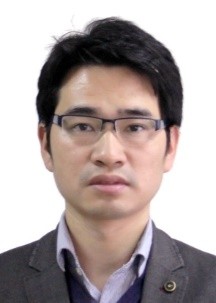
Prof. Chaoyang Shi, Tianjin University, China
Biography: Chaoyang Shi received the Ph.D. degree from the Department of Micro-Nano Systems Engineering, Nagoya University, Nagoya, Japan, in 2013. He was a Postdoctoral Research Fellow with Imperial College London, U.K., and the University of Toronto, Toronto, ON, Canada. Since 2019, he has been a Full Professor at the School of Mechanical Engineering, Tianjin University. His research interests include continuum robots for flexible endoscopy, parallel robots for microsurgery and orthopedics, trans-catheter intravascular robotics, PZT-based micro-scaled automation, optical fiber-based tactile sensing techniques, and sensor fusion.
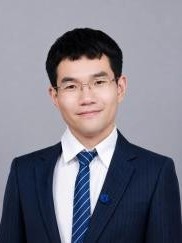
Prof. Han YUAN, Harbin Institute of Technology, Shenzhen, China
Biography: Dr. Han YUAN, professor and PhD Supervisor at Harbin Institute of Technology, Shenzhen, Guangdong "Pearl River Scholar". He was a visiting scholar at the Soft Robotics Laboratory, University of Bristol, UK. His research focuses on cable-driven flexible robotics. He has led 7 national-level research projects, published over 70 academic papers, and been granted more than 40 national invention patents.
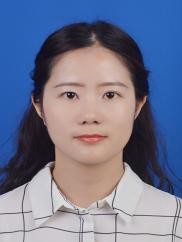
Prof. Huifang Min, Nanjing University of Science and Technology, China
Biography: Huifang Min is a Professor and Ph.D. Supervisor at Nanjing University of Science and Technology. Her research primarily focuses on the design and analysis of nonlinear systems. She currently serves as the Principal Investigator for several research projects, including the General Program and the Young Scientists Fund of the National Natural Science Foundation of China. As the first or corresponding author, she has published over 40 academic papers in authoritative international journals in the field of automatic control. Her awards and honors include the First Prize of the Jiangsu Provincial Science and Technology Award (Natural Science, 3/5), the Second Prize of the Science and Technology Research Award for Higher Education Institutions in Jiangsu Province (1/5), the First Prize of the Science and Technology Award of the Jiangsu Association of Automation (1/5), and the Jiangsu Provincial Young Talent Support Project, etc. She currently serves as an Editorial Board Member for Nonlinear Dynamics, is a Senior Member of IEEE, etc.
Speech Title: Prescribed-Time Stability and Control of Output-Constrained Nonlinear Systems
Abstract: In the fields of unmanned systems and intelligent equipment, many core controlled objects (such as the position tracking of unmanned ground vehicles, the robotic arm movements of industrial inspection robots, and the flight attitudes of unmanned aerial vehicles) are fundamentally highly complex nonlinear systems. Their outputs or states must be strictly confined within safe bounds. Once these constraints are violated, it will not only lead to a degradation in control performance but may also cause severe physical collisions and safety accidents. At the same time, in complex and dynamic practical tasks, explicit and stringent requirements are often placed on the system's response time to achieve rapid and safe autonomous regulation. To address these critical needs, this presentation focuses on nonlinear systems subject to safety constraints (including systems with stochastic disturbances) and explores their prescribed-time stability and control problems.
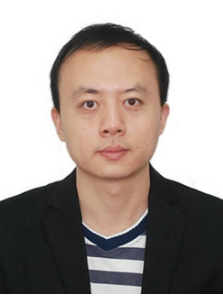
Prof. Jingang Lai, Huazhong University of Science & Technology, China
Biography: Jingang Lai is a Professor and Ph.D. Supervisor at the School of Artificial Intelligence and Automation, Huazhong University of Science and Technology, a National Distinguished Young Scholar, and an Alexander von Humboldt Fellow. From 2015 to 2021, he conducted research at institutions including RMIT University (Australia) and RWTH Aachen University (Germany). He previously served as a Guest Professor at the E.ON Energy Research Center, RWTH Aachen University. He is a vice-chair of the IEEE Industrial Electronics Society (IES) Wuhan Chapter. He has published more than 90 papers in SCI journals such as IEEE Transactions and Automatica. He has led or participated in over 30 research and talent projects, including: National Natural Science Foundation of China (NSFC) projects, EU Horizon 2020 projects, Australian ARC Discovery Projects (DP), National Key R&D Program of China (Science and Technology Innovation 2030), Key (Joint) Projects of NSFC, and Science and Technology Projects of China Southern Power Grid. He serves as a reviewer for project proposals of the National Natural Science Foundation of China (NSFC) and the European Research Council (ERC). He is currently or has been an Associate Editor for 7 international SCI journals, as well as a Guest Editor for multiple SCI journals.
Speech Title: Distributed Cooperative Control for Cyber-physical Microgird Clusters
Abstract: To implement the national "Dual Carbon" strategic goals, microgrid clusters highly empowered by new-generation information and communication technologies feature high networking, autonomy and intelligence. Through interconnection and mutual support among microgrid clusters, large-scale access to massive, geographically dispersed, cross-regional, heterogeneous and diverse distributed energy resources can be achieved. This helps further enhance the power grid’s capability to accommodate, allocate and regulate clean energy, thus better ensuring safe, reliable, economical and efficient operation of the power grid. How to adopt advanced new-generation information and communication technologies to realize efficient, stable and optimal control of such cyber-physcial systems has long been a research hotspot. This report presents an distributed cooperative control strategy for cyber-physical microgrid clusters, which can guarantee efficient and stable operation of the system. Experimental results also verify the effectiveness of the proposed method.
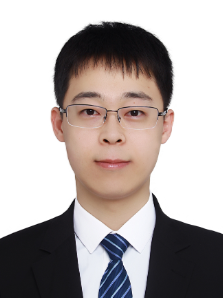
Prof. Jin-Xi Zhang, Northeastern University, China
Biography: Jin-Xi Zhang (Senior Member, IEEE) received the B.S. degree in automation and the Ph.D. degree in control theory and control engineering from the Northeastern University, China, in 2014 and 2020, respectively. From 2019 to 2020, he was a Research Fellow with the University of Johannesburg, South Africa. He is currently a Research Professor with the State Key Laboratory of Synthetical Automation for Process Industries, Northeastern University. His research interests include prescribed performance control, fault diagnosis and fault-tolerant control for complex nonlinear systems. He is also an Associate Editor for IEEE Transactions on Cybernetics, International Journal of Fuzzy Systems, International Journal of Control, Automation, and Systems, and Journal of Automation and Intelligence.
Speech Title: Fault-tolerant Control of Underactuated Unmanned Ground Vehicles
Abstract:This talk focuses on fault tolerant trajectory-tracking control for differential drive unmanned ground vehicles (UGVs) subject to sensor and actuator faults. The conventional fault tolerant control (FTC) methods are valid for minor sensor faults. By contrast, this presentation introduces constraint explicitization and variable dimension reduction techniques based on unit sum-of-squares functions, and derives controllability criteria as well as guarantee mechanisms for the underactuated unmanned vehicles under the severe sensor faults. Further, for the restriction to constant actuator faults in the traditional FTC methods, a power law control gain tuning scheme based on barrier functions is presented, which yields a compensation technique for the time varying actuator faults of the UGVs.
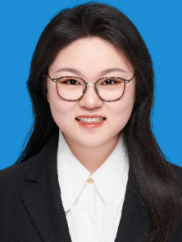
Prof. Lin Jiang, Northeastern University, China
Biography: Lin Jiang is a Research Professor and doctoral & master supervisor at the College of Information Science and Engineering, Northeastern University, and a recipient of “Young Talent Support Project of the China Association for Science and Technology”. Her research mainly focuses on industrial artificial intelligence and intelligent pipeline inspection. She has authored over 30 papers in top journals of the field including IEEE TII and IEEE TIE. She leads over a series of national and provincial research projects such as the sub-project under the Major Scientific Research Instrument Development Program of NSFC, the Youth Program of NSFC, the Special Postdoctoral Research Grant and the Natural Science Foundation of Liaoning Provincial Department of Science and Technology. She has been awarded 7 provincial and ministerial-level science and technology honors, including the Second Prize of Wu Wenjun Science and Technology Progress Award from CAAI as the first completer, and the First Prize of Liaoning Provincial Science and Technology Progress Award. She is an IEEE Member, Deputy Secretary-General of the Industrial Artificial Intelligence Technical Committee under CAAI, and Member of the Youth Working Committee under CAA.
Speech Title: Intelligent Inspection and Assessment Technology for Subsea Pipelines
Abstract: With the development of the industrial system and national economy, marine energy exploitation has become a major pillar of the energy industry. As primary energy carriers, oil and natural gas underpin socioeconomic development and national defense construction. Serving as the "lifeline" for the transportation of offshore oil and gas resources, subsea pipelines are of great strategic significance for safe operation. Harsh subsea natural conditions, unstable surface foundations, wave scouring and medium corrosion render subsea pipelines highly susceptible to corrosion and crack defects. When such defects develop to a certain extent, pipe wall rupture may occur, triggering oil‑gas leakage accidents. These incidents will result in substantial losses to the national economy and severe pollution of the marine ecological environment. Severe internal noise interference within subsea pipelines leads to impure and incomplete acquired samples. Conventional defect detection technologies fail to address the challenges of missed detection and false detection under strong interference. From the perspective of magnetic flux leakage signal processing and analysis for pipelines, the presenter conducts in‑depth research via multi‑source signal fusion, and puts forward a series of innovative research achievements, including restoration of distorted signals induced by velocity effects, anomaly signal detection, recovery of abnormal signals for defect samples, defect detection, and defect size inversion. These achievements effectively realize high‑quality inspection and assessment of subsea pipelines.
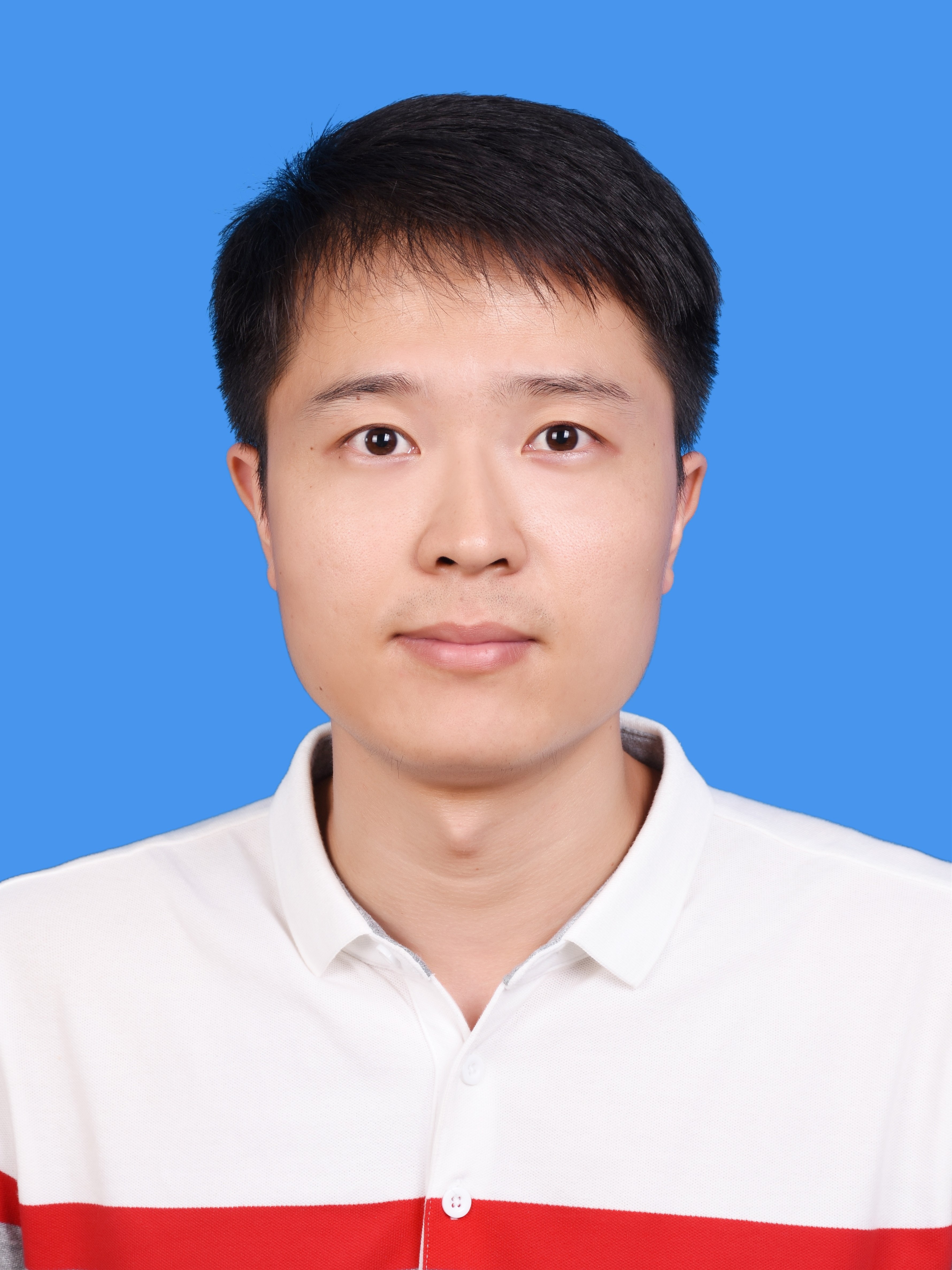
Prof. Meng Zhang, Xi'an Jiaotong University, China
Biography: Professor Meng Zhang is a Young Changjiang Scholar of Xi’an Jiaotong University. He received his Doctoral degree from the School of Control Science and Engineering, Zhejiang University. He has been awarded the First‑class Prize for Excellent Scientific and Technological Research Achievements of Shaanxi Universities, the First‑class Prize for Scientific and Technological Progress of Chinese Association of Automation, the First‑class Prize for Natural Science of Chinese Association of Automation, Wu Wen‑jun Excellent Young Scientist Award for Artificial Intelligence, etc.
He has published more than 100 journal and conference papers, including regular papers in Automatica, IEEE IEEE TAC, and IEEE TIFS. He has presided over more than 20 research projects such as the National Key R&D Program of China, the Joint Key Project of the National Natural Science Foundation of China. He serves as an Associate Editor for journals including IEEE TASE and IEEE TCYB. His research interests cover optimal control and security of power systems, nonlinear system control, and mobile robots.
Speech Title: Optimal Regulation of Multiple Energy Storage for Power Grid Frequency Stability
Abstract: With the continuously increasing penetration of renewable energy sources, the frequency-stability problem caused by the declining inertia level of power systems has become increasingly prominent. Conventional frequency regulation and inertia-support mechanisms relying on synchronous generators are confronted with significant challenges. Owing to their fast-response and flexible-regulation capabilities, multiple-energy-storage systems have become a critical technical means for improving power-grid frequency stability. Considering the discrepancies among different types of energy storage in terms of power response and energy support, this paper firstly designs a dynamic droop control strategy to realize the collaborative sharing and rapid response to frequency deviations for powe-type and energy-type energy storage. Secondly, a two‑layer model predictive control (MPC) framework is constructed. The upper layer adopts Tube-MPC to enhance the system robustness against uncertain external disturbances, while the lower-layer MPC implements rolling optimization for the output of multiple energy storage units under constraints, so as to improve the stability and dynamic performance during frequency regulation. Finally, deep reinforcement learning is employed to realize virtual inertia control of the energy-storage system, enabling the system to adaptively adjust control strategies according to operating conditions and ameliorate the dynamic frequency-response characteristics. The proposed optimal regulation method for multiple energy storage has been tested and applied in several prefecture-level power companies, which effectively guarantees the power‑grid power-balance capability and frequency stability.

Prof. Qingkai YANG, Beijing Institute of Technology, China
Biography: Qingkai YANG is a professor of the Beijing Institute of Technology. He obtained dual doctoral degrees from the University of Groningen in the Netherlands and the Beijing Institute of Technology in 2018. His current research mainly focuses on morphological intelligence, autonomous mobile robots, and cooperative control of multi-agent systems. He won the First Prize of Natural Science Award from The Ministry of Education of China and the Chinese Association of Automation, respectively, in 2022. He serves as a member of the Technical Committee on Control Theory of Chinese Association of Automation, and a senior member of IEEE.
Speech Title: Design and Control of Morphological Intelligent Systems
Abstract: This talk focuses on bio-inspired morphological autonomous systems. The talk begins with modeling and control strategies for tensegrity structures that enable environmental interaction and structural reconfiguration, including methods for single-step rolling, continuous rolling, and folding–unfolding control. It then extends to bio-inspired neuromorphic perception, introducing neuromorphic navigation and event-based vision mechanisms. Finally, from the perspective of automatic control, the talk presents recent advances in swarm autonomous systems and embodied interaction with adaptive environments.
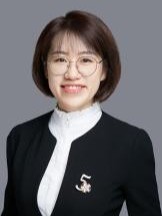
Prof. Wen Kang, Beijing Institute of Technology, China
Biography: Wen Kang received the B.S. degree from Wuhan University, Wuhan, China, in 2009, and the Ph.D. degree from Academy of Mathematics and Systems Science, Chinese Academy of Sciences, Beijing, China, in 2014. From 2015 to 2017, she was a Postdoctoral Researcher with the School of Electrical Engineering, Tel Aviv University, Tel Aviv-Yafo, Israel. In 2022, she joined Beijing Institute of Technology as a Professor. Her research interests include distributed parameter systems, time-delay systems, multi-agent systems, intelligent control, and ADRC. Prof. Kang was supported by National-level young talent program, Beijng Nova program, Xiaomi Young Scholar program. She serves as Associate Editor for IMA Journal of Mathematical Control and Information, IFAC MICNON, Information and Control. She is a Senior Member of IEEE and CAA.
Speech Title: Stabilization of PDE Systems and Its Application in Multi-agent Systems
Abstract: Many important plants (e.g. flexible manipulators or chemical reactors) are governed by PDEs and are often described by models with a significant degree of uncertainty. Stabilization for infinite-dimensional PDE systems is a challenging problem. We aim to provide efficient methods for stabilization of PDEs and for PDE-based multi-agent deployment.
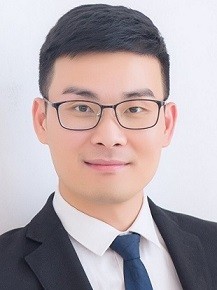
Prof. Xiao-Hu Zhou, Chinese Academy of Sciences, China
Biography: Xiao-Hu Zhou serves as professor (Doctoral Supervisor) in Institute of Automation, Chinese Academy of Sciences. He is a recipient of Excellent Young Scientists Fund Program from the National Natural Science Foundation of China (NSFC), a recipient of Asia Pacific Neural Network Society (APNNS) Young Researcher Award, and a member of the Youth Innovation Promotion Association of the Chinese Academy of Sciences. He is also the Chief Scientist of China National Key R&D Young Program. His main research areas include endovascular robots, tactile bionic perception, and intelligent image navigation. He has published over 130 academic papers in the field, including 45 in IEEE Transactions (25 as first/corresponding author), and 18 in top-tier conferences like MICCAI, IEEE ICRA, IJCAI, and AAAI. He holds 3 authorized international PCT patents and 45 China invention patents. He has received a number of supports and funding, particularly the prestigious Excellent Young Scientists Fund Program, China National Key R&D Young Program, and CIE-Tencent Robotics X Rhino-Bird Focused Research Program. His researches also were awarded as the “Best Paper Award” for 3 times in IEEE RCAR 2022/2023 and ICBIR 2023, and the “Excellent Doctoral Dissertation Award” for twice by CAAI and CAA.
Speech Title: The Exploration on the Intelligence of Vascular Robotics
Abstract: Percutaneous coronary intervention (PCI) is an effective treatment for cardiovascular diseases. Compared with traditional thoracotomy, PCI offers advantages of minimal trauma and quick recovery. Vascular robot has further promoted its applications in clinical practice. However, the current intelligence level of these robots is still relatively low, resulting in limited intelligent assistance to interventionalists. This talk focuses on robotic intelligent assistance for vascular intervention. It will analyze various factors that hinder the advancement of the intelligence level of vascular robots. Specifically, this talk will delve into the recent research progress in intelligent imaging analysis and navigation, skill modeling and learning and their clinical practice.

Prof. Zhenni Li, Guangdong University of Technology, China
Biography: Zhenni Li is a Professor and Ph.D. Supervisor at Guangdong University of Technology, and Deputy Director of a Guangdong-Hong Kong-Macao Joint Laboratory. Her research focuses on artificial intelligence and high-precision positioning. She has led five national research projects, including projects funded by the National Natural Science Foundation of China (NSFC) under the Original Exploration and General Programs, as well as seven provincial-level research projects. She has published 62 academic papers as the first or corresponding author, including 31 papers in top-tier/Q1 journals or recognized as highly cited papers. She led the development of two group standards for BeiDou high-precision positioning, and Received the Special Prize for Scientific and Technological Progress from the Chinese Association of Automation and the First Prize for Scientific and Technological Progress of Guangdong Province.
Speech Title: BDS Positioning Enhancement Technologies in Complex Urban Environments and Applications
Abstract: With the rapid advancement of China’s BeiDou large-scale application strategy, high-reliability standalone BeiDou positioning has become a critical technological bottleneck. Its applications are expanding into challenging scenarios such as low-altitude UAV inspection, intelligent driving, and offshore operations. High-precision satellite positioning in complex environments has been identified as a major challenge in satellite navigation worldwide.
In complex urban environments characterized by signal blockage, reflection, and dynamic disturbances, standalone BeiDou suffers from insufficient observation redundancy, difficult multipath error modeling, and dynamic model mismatch, compromising positioning accuracy, continuity, and reliability.
In collaboration with leading BeiDou chip manufacturers, the project team has conducted over a decade of industry–academia–research collaboration and developed key technologies for high-reliability standalone BeiDou positioning. The team pioneered an AI-enabled lightweight architecture integrating positioning algorithms with chip computing, overcoming key challenges including intelligent NLOS signal identification, online pseudorange error compensation, and robust positioning in dynamic environments. Two independently developed intelligent standalone BeiDou positioning chips were subsequently produced.
The chips achieve decimeter-level RTK positioning and sub-2-meter standalone positioning accuracy, overcoming the accuracy bottleneck of standalone BeiDou in complex environments. Their combined annual shipments exceed 10 million units, with large-scale deployment in UAV applications.
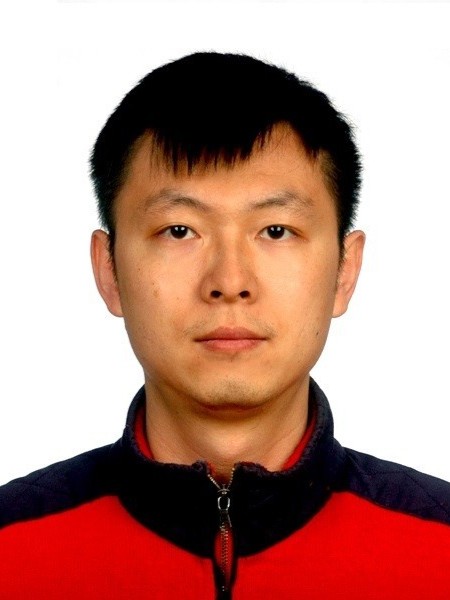
Prof. Zhongyang Fei, Dalian University of Technology, China
Biography: Zhongyang Fei received the B.Sc. and M.Sc. degrees in control science and engineering from Harbin Institute of Technology, China, in 2007 and 2009 respectively, and the Ph.D. degree in mechanical engineering from Washington University in St Louis, USA, in 2013. Since 2021, he has been with the School of Control Science and Engineering, Dalian University of Technology as a Full Professor. His research interests include intelligent control of aero-engines, analysis and control of switched systems and networked systems. He has authored or co-authored over 100 papers in well-known SCI journals in the field, including 13 papers in Automatica and IEEE Transactions on Automatic Control, and more than 40 papers in IEEE Transactions series. As the Principal Investigator, he has consecutively led over 10 projects, including General Programs of the National Natural Science Foundation of China. He was the recipient of the First-Class Natural Science Award of Heilongjiang Province in 2016, and was selected into the “Young Top-Notch Talents” program of the Central Organization Department of China in 2021. He has served on the editorial boards of several international journals and as a session chair/organizer for various international conferences.
Speech Title:Multi-Mode Switching Control for Variable Cycle Engines
Abstract: In view of the wide operating speed range, complex configuration, and multiple operating modes characteristic of variable cycle engines, this talk will discuss multi-mode switching control for such engines. Given the stringent requirements of variable cycle engines in terms of rapidity, robustness, and smoothness, the fixed-time control approach for switched systems is integrated and advanced, and the problem of fixed-time sliding mode control for switched systems is examined. By designing a fixed-time control law and incorporating mode-dependent dwell-time constraints, an upper bound on the reaching time of each sub-sliding surface is prescribed, thereby ensuring that every sub-sliding surface is reachable within a specified time. This effectively avoids oscillation of the system state among multiple sub-sliding surfaces, guarantees fast reachability of the sliding surfaces, and significantly enhances system robustness. A fixed-time compensator is devised to reconstruct the original control signal. Furthermore, an exit mechanism for the compensation component is proposed to improve the smoothness of fuel flow and thrust during mode transitions.

Copyright © CRC 2016-2026. All rights reserved
- +86-19130670943